Safe Internal Temperature Chart for Meat and Poultry
Senior Editor
Poultry of every kind is safe at 165°F, ground beef and pork at 160°F, and whole steaks, chops and roasts of beef, pork, veal and lamb at 145°F followed by a three-minute rest. Those are the figures on the USDA FSIS Safe Minimum Internal Temperature Chart, as published when this guide was checked in October 2026. They are the floor, read from the center of the food with a thermometer, and they decide one thing: whether dinner is safe to put on the table.
Most home cooks never consult them. FSIS cites studies showing only about 15% of consumers consistently use a food thermometer on meat. If you own one, the chart below is the number you are chasing.
| What you're cooking | Safe minimum | Rest before eating |
|---|---|---|
| Chicken and turkey: whole bird, breasts, thighs, legs, wings, giblets | 165°F | None required |
| Ground chicken and turkey | 165°F | None required |
| Ground beef, pork, veal, lamb | 160°F | None required |
| Beef, pork, veal, lamb steaks, chops and roasts | 145°F | At least 3 minutes |
| Fresh or smoked (uncooked) ham | 145°F | At least 3 minutes |
| Fish and shellfish | 145°F, or until opaque and flaking with a fork | None required |
| Egg dishes such as frittata or quiche | 160°F | None required |
| Leftovers and casseroles, reheated | 165°F | None required |
On a whole steak or chop, any bacteria sit on the outside, and the outside is the part that gets hottest. Grinding changes that. It spreads whatever was on the surface through the whole batch, so the middle of a patty has to reach a temperature that would be more than enough for the middle of a steak. That's the whole reason ground meat sits at 160°F and whole cuts at 145°F.
The rest on whole cuts is part of the standard too, not a chef's flourish. FSIS counts the three-minute hold as part of the kill: the temperature evens out through the meat, and pathogens keep dying while it does. Skip it and you've met only half the rule.
None of this can be judged by eye, and FSIS is blunt about that. Ground beef can turn brown at around 130 to 135°F, well short of 160°F, a problem the agency calls premature browning. Some lean ground beef stays pink after it has passed 160°F, and pork cooked safely to 145°F can stay pink as well. Color gets it wrong in both directions.
A hamburger cooked to 160 °F (165 °F for ground poultry), measured with a food thermometer throughout the patty, is safe — regardless of color.
A right number from the wrong spot is still a wrong number. The FSIS table doesn't say much about placement, so this is the part that matters most on a weeknight.
A whole chicken or turkey gets three readings: the innermost part of the thigh, the innermost part of the wing, and the thickest part of the breast. Each one has to reach 165°F on its own, as the FoodSafety.gov roasting charts spell out. If you stuff the bird, which FSIS advises against, the center of the stuffing has to hit 165°F as well.
Bone and fat throw the reading off. The Temperatures.com guide notes that bone conducts heat and can read high, so aim for the thickest part of the meat and keep the tip clear of both. That holds whether you're checking a roast or thick supermarket pork chops.
Patties and other thin cuts should be probed from the side, pushed in horizontally so the tip lands in the middle rather than poking out the bottom.
The chart tells you when food is safe. It doesn't tell you when food is good, and FSIS says so: you may cook past the minimum for preference, but the figures are a safety floor, not a doneness target.
On steak, the gap is wide. The 145°F minimum lands in medium territory, and Traeger's guide notes that many experienced cooks pull steaks at 130 to 135°F for medium-rare. That's a fair description of what people do, and Traeger frames it honestly as a personal risk decision, not something USDA endorses. If that's your call at home, make it knowing which side of the line you're on.
Poultry has no such gap. Traeger puts it plainly: "There's no wiggle room when it comes to undercooking poultry." Thighs are the one place cooks go the other way and take the meat well past 165°F on purpose, a choice the FSIS preference allowance covers. The sources behind this guide don't give a tested target for that, so I won't invent one. When roasting bone-in thighs on a sheet pan, treat 165°F as the minimum and let texture decide how far beyond it you go.
Carryover is the other reason to stop chasing high numbers. Meat keeps cooking after it leaves the heat. Traeger puts the rise at 3 to 5°F for steaks, chops and chicken breasts, 5 to 10°F for pork loins and whole chickens, and 10 to 15°F for prime rib, whole turkeys and briskets. Temperatures.com gives 5 to 10°F for large roasts, so treat those ranges as rough guides, not promises. In practice, a chop that reads 145°F in the pan will sit above that by the time you eat it, and one taken to 155°F 'to be safe' ends up dry.
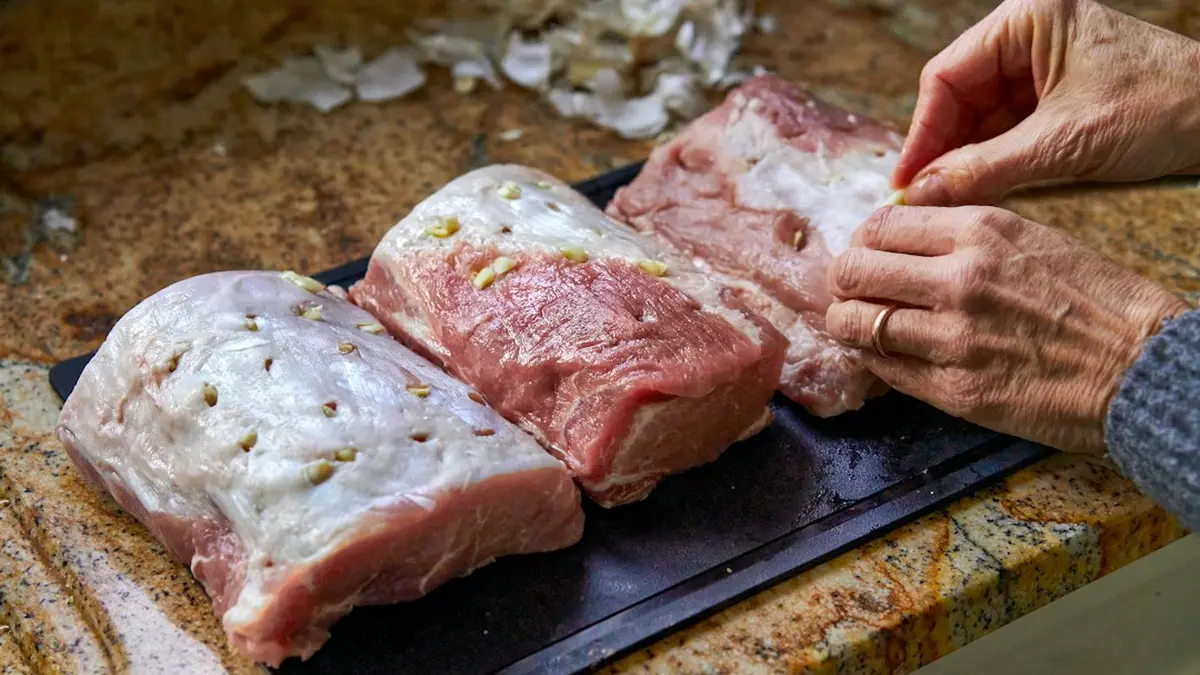
Stop looking at color and juices, which FSIS research has shown tell you nothing reliable either way. Learn three numbers: 165°F for anything with feathers, 160°F for anything ground, and 145°F plus a rest for a whole cut of red meat or pork. Probe the thickest part, away from bone, and check a whole bird in three places. Then decide how far above the floor you want to go, and remember that resting will take it further.
All of this assumes the thermometer reads true. A probe that drifts makes every number above a guess.
A two-minute ice-water check confirms it reads correctly before you trust it with chicken.
Calibrate your thermometerOne email a week with what we published. No spam, nothing sold, unsubscribe in one click.
Comments
No comments yet. Be the first to comment!
Leave a Comment