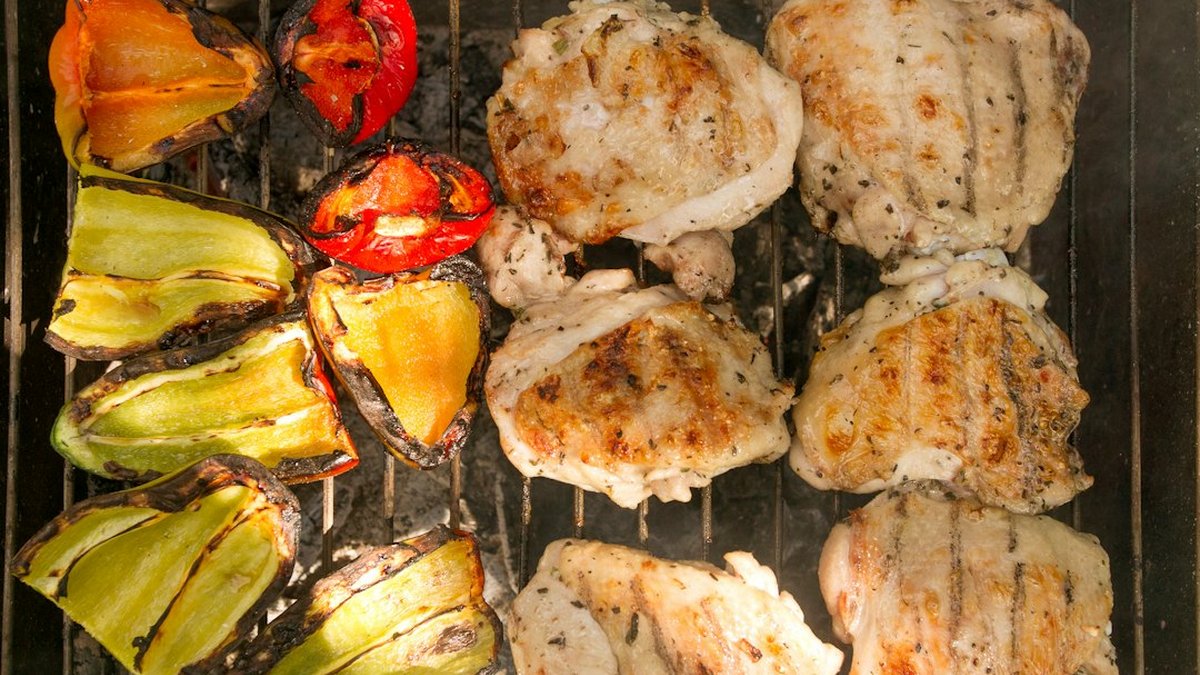
How to Roast Chicken Thighs and Vegetables on One Sheet Pan
Contributing Writer
At the end of this you have bone-in thighs with skin that crackles and vegetables that browned rather than stewed, on one pan, in about 50 minutes including the chopping. The heat is high on purpose: the recipes worth copying run 425°F or 450°F, well above the 325°F floor USDA says roasting should never drop below. The one thing to know before you start is that a crowded pan steams, and steam is the enemy of everything you want here.
Two pans on two racks beats one pan piled high. Rotate them at least once during the roast.
Skinless breast is the wrong cut for this. It dries out in the time the vegetables need. Boneless thighs work but want about 30 minutes instead of 40.
Skip russets. They don't crisp the way waxy potatoes do in chicken fat.
Half a tablespoon of oil is enough for skin-on thighs, which render their own fat. Use a full tablespoon on the vegetables.
Not optional. FSIS is blunt that color and juice clarity tell you nothing reliable about whether poultry is cooked.
450°F is the other defensible choice: it browns harder and runs 40 to 45 minutes. At 425°F you're looking at 30 to 42 minutes.
Anything from 1 inch to 1.5 inches works. What matters is that they're all the same. One giant chunk is the piece that's still hard at the end.
Either 1-inch pieces or 2 to 3 inch sticks. Both finish with the potatoes.
Every piece should look glossy. Oiling them on the pan always leaves a few dry ones, and dry ones don't brown.
Nothing overlapping, nothing piled. If you can't see pan between the pieces, get the second pan out.
Don't rinse the chicken first; washing it splashes bacteria around the sink. Stretch the skin so it covers the meat, and put the thighs on the pan itself, never on top of the vegetables.
Stir the vegetables, leave the chicken alone. The skin needs uninterrupted contact with dry heat to crisp.
165°F is the number that makes it safe, full stop. Plenty of cooks take dark meat to 170 to 175°F because the connective tissue breaks down further and the thigh eats more tender.
Some cooks go 3 to 5 minutes. Stand at the oven door for it; pale to burnt is a short trip under a broiler.
FSIS asks for 3 minutes minimum, and the residual heat keeps working during it. Five to ten is better for the juices.
Leftovers go in the fridge within two hours of coming out of the oven, one hour if the kitchen is above 90°F, and keep three to four days. You now have the shape of every sheet pan dinner you'll cook: hard vegetables cut to one size, protein on the pan surface, high heat, nothing touching. When it's cold enough that you'd rather have sauce than crisp skin, braise the same cut instead.
One email a week with what we published. No spam, nothing sold, unsubscribe in one click.
Comments
No comments yet. Be the first to comment!
Leave a Comment