A 2.5 to 3.5 pound chuck roast with carrots and potatoes belongs in a 5.5 to 6 quart Dutch oven. Move up to 7 quarts only when the roast reaches 4 to 5 pounds. Pot size decides two things you can't fix once the lid is on: whether the roast browns properly first, and whether the liquid is still there three hours later. The usual advice is to buy the biggest pot you can afford. For a weeknight-sized roast, that advice is wrong more often than it's right.
Liquid, floor and the gap between
A braise works because the meat sits partly in liquid inside a closed pot. Steam rises, hits the lid and drips back down. How deep the liquid needs to be depends on whose guide you read. KitchPrep's cook-time guide says it should cover at least a third of the meat. ATK's Simple Pot Roast has you bring it halfway up the sides of a thinner roast.
The size of the pot decides how much liquid it takes to reach that depth. When the roast and vegetables fill most of the floor, a modest pour climbs the sides. When there's a wide moat of empty floor around the meat, you either need far more liquid to reach the same depth, or the liquid you have lies shallow across a big hot surface. Hearth and Patina puts it bluntly: "A big pot cooking a small amount of food leaves too much exposed surface and can dry a braise out."
The floor also matters for the sear. ATK's shopping guide wants pots "at least 8 inches wide" and 6 quarts or more. Its equipment review asks for 8.5 inches of cooking surface on 5 to 6 quart models and 9 inches on 7-quart ones. Flour and Scale puts a 5.5 to 6 quart pot at roughly 9 to 10 inches across. That clears ATK's bar for a single chuck roast. The brown layer the sear leaves behind is what you deglaze into the braising liquid, so a cramped floor costs you flavor as well as crust.
Three places the numbers turn up
The reference recipe. ATK's Simple Pot Roast uses a 3.5 pound boneless chuck-eye roast. It asks only for a "large heavy-bottomed Dutch oven" and gives no quart figure. Set it beside ATK's own floor of 6 quarts and 8 inches wide, and you have the size that recipe was built around.
The chicken proxy.Lodge's sizing guide sizes pots by the bird they hold. A 5 to 6 quart pot fits a chicken up to 4 pounds, and a 7 to 7.5 quart pot fits one up to 6 pounds. A chuck roast isn't a chicken, but the arithmetic of a lump of meat in a lidded pot carries over. A 3-pound roast sits comfortably in the smaller tier. A 4 to 5 pound roast belongs in the larger one.
The recipe sites. Longbourn Farm calls 5 quarts "the smallest size Dutch oven you can use" for a 3 to 5 pound chuck roast, with up to 7 working well. Dutch Oven Daddy recommends 5 quarts for the same weight range. Five quarts will hold the meat. Once you add vegetables to the top of that weight range, it's tight, which is why I'd treat 5.5 to 6 as the real starting point.
None of these sources gives a figure for a bone-in roast. A bone takes up floor space without adding meat, so a bone-in roast around 4 pounds is the one I'd put in the 7-quart.
The best case for always buying big comes from ATK. Its editors' short answer is "the biggest you can afford," with 7 quarts as the minimum, because more space means one pot handles everything from stew to bread. That's a fair argument for versatility. But ATK's own equipment review concedes that 5 to 6 quart pots can do nearly everything a 7-quart can. Its one caveat is that you may have to brown meat in batches. A pot roast is a single piece of meat, so there are no batches. Weight is the other cost. Chef Approved Tools puts an empty 7-quart enameled pot at 14 to 16 pounds and a full one at over 25. That is a lot to lift out of a 325°F oven on a Tuesday.
Safe is not the same as done
Two temperatures get mixed up in pot roast advice, and they answer different questions. The USDA FSIS chart says beef roasts "should reach a minimum internal temperature of 145 degrees F" and rest at least 3 minutes. That number tells you the roast is safe to eat. It doesn't tell you the roast is tender. A chuck roast at 145°F is safe and tough, because its collagen hasn't broken down yet.
145°F
195 to 205°F
What it tells you
The roast is safe to eat (after a 3-minute rest)
The collagen has broken down
Source
USDA FSIS
Dutch Oven Daddy; KitchPrep gives 190 to 200°F
Chuck roast at this point
Safe, still tough
Fork slides in, meat pulls apart
KitchPrep places the start of collagen breakdown at 170 to 180°F. That gap is why the pot has to hold its liquid for hours rather than minutes. It's also why Dutch Oven Daddy warns against raising the oven temperature to speed things up.
Before you buy one
Start by weighing the roasts you actually buy, not the one you buy at Christmas. If they run 2.5 to 3.5 pounds, look at the Lodge 6 Quart Enameled Cast Iron Dutch Oven. Lodge's own guide calls 6 quarts its most popular and most versatile size for a family of four.
If you cook a 3-pound roast most months and a bigger one now and then, the Tramontina 6.5 Qt Enameled Cast Iron Covered Round Dutch Oven sits between the two tiers. None of the reviews cited here measured it, so judge it on its stated capacity and floor width.
If you regularly buy 4 to 5 pound roasts, go to 7 quarts with the Cuisinart Chef's Classic 7 Qt Enameled Cast Iron Round Casserole. For a sense of price, ATK named a Cuisinart Chef's enameled casserole its Best Buy in the 6.5 to 7.5 quart tier, at about $106 on sale when the review ran. Its overall winner, the Le Creuset 7¼ quart, was about $500.
Whichever you pick, check the floor width against ATK's 8.5 and 9 inch marks. A long roast may fit better in an oval pot, as covered in round versus oval. If your braises lean on wine or tomato, ATK's preference for a light-colored interior is one more reason to choose an enameled pot.
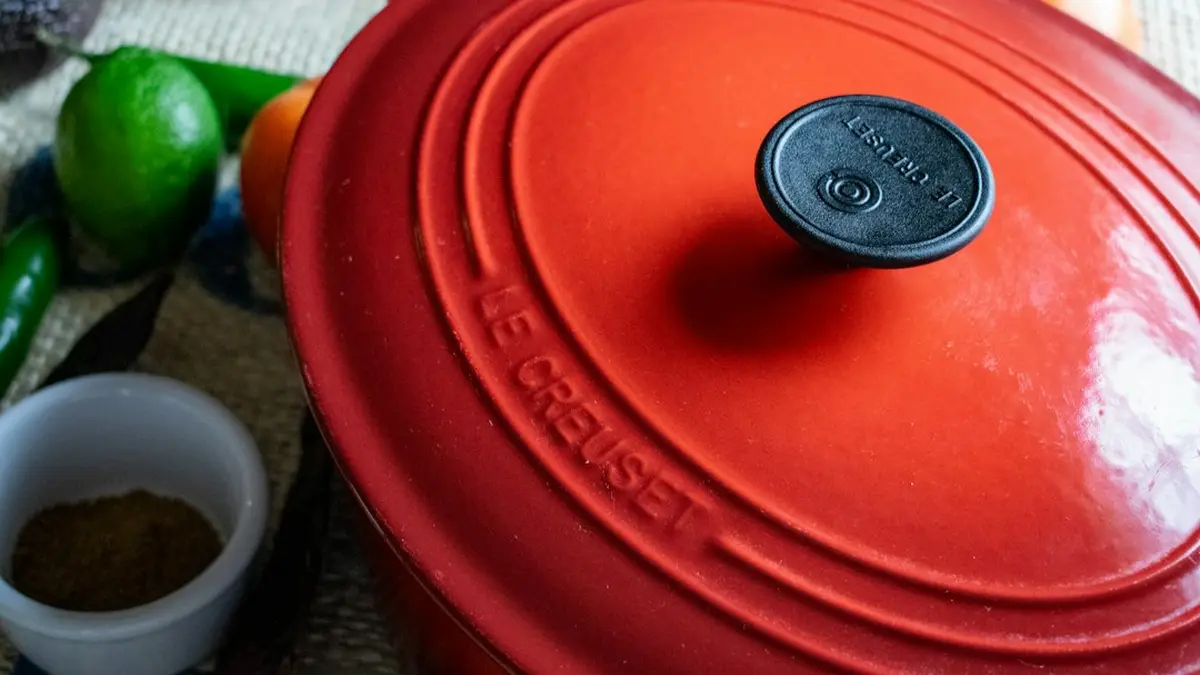 Photo by
Comments
No comments yet. Be the first to comment!
Leave a Comment