How to Deglaze a Pan and Turn It Into a Sauce
Senior Editor
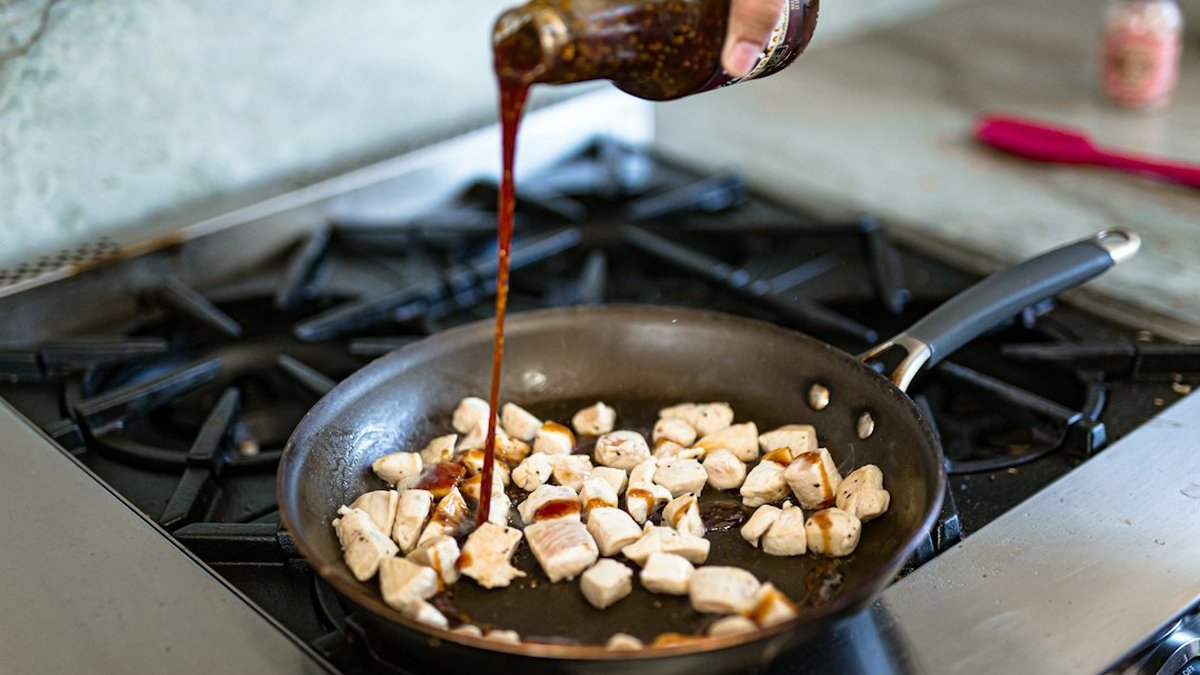
Deglazing is pouring liquid into a hot pan to dissolve the browned bits stuck to the bottom, then boiling that liquid down until it coats a spoon. That is the whole idea. The brown stuff has a name, fond, and The Kitchn describes it as concentrated Maillard reaction compounds built up during searing, roasting or sautéing: the same browning that gave your chicken thighs their color left a second helping of it welded to the pan.
You meet this the moment the meat comes out and you are looking at a hot pan with four minutes of usable heat left in it. What you do in those four minutes decides whether dinner has a sauce or whether you scrub that flavor into the sink.
Fond is stuck, not burnt. Juices from the meat hit the hot metal, the water boils off, and what is left dries onto the surface as a caramelized film. Add liquid back and it goes into solution: the liquid bubbles hard, the film softens, and a spoon lifts it off in sheets. The Skillful Cook makes the point that it is the rapid bubbling, not the scraping alone, that does most of the lifting, which is why heat matters as much as liquid.
Then you reduce. Water leaves, flavor stays, and a thin splash becomes something with body. Most of the guides put the reduction at 3 to 5 minutes over medium heat to take the liquid down by half; Fond's glossary puts the whole business, liquid in to sauce out, at 2 to 3 minutes, with the full build from searing to finishing at 5 to 8. Call it four minutes and you will not be far wrong.
There is no sauce without fond, and nonstick does not make fond. That is the flat verdict from every cookware source here, including ones with a nonstick range to sell: T-fal says stainless creates more visible, richer fond, and 360 Cookware says the coating prevents fond forming at all. Food that does not stick leaves nothing behind to lift.
Stainless is the easy answer because it is non-reactive, so wine and vinegar do it no harm. Cast iron works too, and if you already sear in one you are set, though All-Clad notes it wants extra care with acidic liquids. The brands have an obvious interest here, and I would discount some of it: Chef Samantha George's claim that an All-Clad D3 lifts fond in eight seconds is a marketing figure, not a kitchen one. The material point stands anyway. One heavy-bottomed skillet you can sear in is the whole requirement.
Every source agrees on roughly one tablespoon. Too much and the sauce is greasy and will not emulsify; too little and you lose flavor.
Minced shallot or garlic in the residual fat, per What's in the Pan. Optional, and it costs you a minute of pan heat.
A quarter cup to a cup, depending on the size of the pan. Deglazing after the fond cools and re-hardens is one of the commonest failures The Kitchn lists.
Keep it moving while it bubbles. Gentle scraping leaves half the flavor on the pan.
Three to five minutes over medium heat. If you used wine, give it an extra 2 to 3 minutes so the raw alcohol cooks off.
Monter au beurre. Cold, cubed, off the heat. Butter added to a pan still on high will break the emulsion.
Reduction concentrates whatever salt was already there, so season at the end or not at all.
The classic two-stage version, if you have five minutes rather than four: deglaze with 120 ml of wine, reduce by half, add 240 ml of stock, reduce by half again, then the butter. Bought stock is fine. Gelatin-rich homemade stock gives more body, which is true and also not happening on a Tuesday.
The pairings are consistent across the sources and they are not fussy. White wine for chicken, fish and pork; red for beef, lamb and duck. Stock is the neutral savoury base. Cider or citrus juice suits pork and poultry, beer suits braised meats, and a small splash of vinegar makes a sharp, punchy sauce for pork chops. Buy something you would drink and skip anything labelled cooking wine, which Fond warns is too salty to reduce.
Amounts vary more than they should: a quarter to a half cup from 360 Cookware and What's in the Pan, a half to a full cup from All-Clad and HexClad. Read that spread as what it is, a function of pan size. Start at a quarter cup in a small skillet and go up from there, because too much liquid at once is on T-fal's list of common mistakes and the fix costs you minutes of reducing.
Water works. All-Clad calls it effective but flavor-neutral, most others call it a backup, and 360 Cookware discourages it outright on the grounds that it adds nothing. They are arguing past each other: the fond supplies the flavor, and water simply declines to add any of its own. Pasta water is the obvious cousin, and none of these guides covers it, so I will not tell you what the starch does to a pan sauce. What I can say is that a plain water deglaze plus butter is a real sauce and better than no sauce.
| Deglazing | Reducing | |
|---|---|---|
| What it does | Dissolves stuck fond into liquid | Boils water off to concentrate what is already dissolved |
| When | The first 30 seconds after the liquid hits the pan | The 3 to 5 minutes after that |
| Needs fond? | Yes, or there is nothing to lift | No |
The other confusion is worth naming: fond is not the burnt stuff. T-fal draws the line between golden-brown fond, which you want, and charred fond, which is bitter and will make the sauce bitter with it. The Kitchn puts the window bluntly, noting fond can go from golden to bitter in seconds. If the pan bottom is black rather than brown, wash it and serve the meat plain.
A Bit Delish has the most useful troubleshooting list I have seen, and it maps neatly onto what people do in a hurry. Greasy and separated means you overheated or over-reduced: off the heat, whisk in a tablespoon of cold water or stock. Thin and watery means you did not reduce enough, so keep going. Boozy means the wine went in and the stock followed too soon; wine wants to be down by about half first. Flat and bland usually means there was no fond to begin with, from a nonstick pan, a crowded pan, or an under-seared piece of meat, which is really a problem to fix at the searing stage rather than the sauce stage. Soy sauce, lemon or Dijon will rescue the evening.
Once you know what fond is, you start protecting it. You dry the meat before it goes in, because dry protein browns and wet protein steams. You resist crowding the pan. You keep half a cup of stock and a stick of butter in the house on purpose, the way you keep the pantry that makes a Tuesday work. And when the chicken comes out and the pan looks ruined, you reach for the wine instead of the sponge.
One email a week with what we published. No spam, nothing sold, unsubscribe in one click.
Comments
No comments yet. Be the first to comment!
Leave a Comment