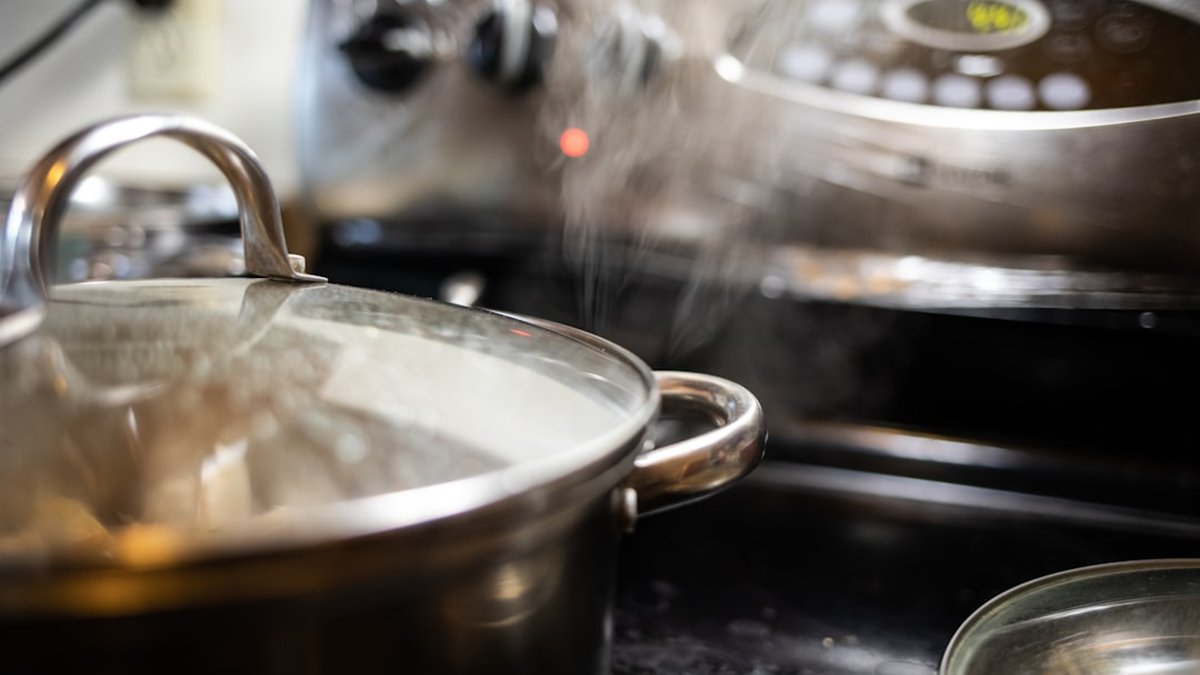
You'll have a pot of separate, fluffy long-grain white rice in about half an hour, and you'll be standing over it for maybe four minutes of that. The one thing to know before you start: the 2 parts water to 1 part rice printed on a lot of bags is too much water for a covered pot, and it is the single most common reason home rice comes out gummy. Use 1 1/2 cups water per cup of rice, put the lid on, and leave it there.

What you need

This is still cheap food, if a little less cheap than it was. BLS price collection published through FRED put white, long-grain, uncooked rice at $1.111 a pound in August 2026, up about 3.6% from April. A pound feeds a table several times over.

  • 1 cup long-grain white rice

    Serves three as a side, two if it's the base of dinner. Scales to 2 cups in the same pot without changing anything but the water.

  • A 2 to 3 quart saucepan with a lid that sits flush

    The lid matters more than the pot. If steam escapes round the edge, your water ratio is wrong before you've started.

  • 1 1/2 cups water per cup of rice

    Measure it. Eyeballing water is how rice goes wrong.

  • 1/2 teaspoon salt per cup of rice
  • A fine mesh sieve, if you're rinsing
  • A timer

    Not a guess. The whole method depends on not opening the lid to check.

The steps

  • Rinse the rice in a sieve under cold water for about 30 seconds

    You're washing off loose surface starch, the stuff that glues grains together. Done when the water running through goes from milky to only faintly cloudy. Shake it well. If you skip this, the rice will be a bit stickier, which is fine under a saucy braise and less good next to a roast.

  • Put the rice, water and salt in the pot and stir once to level it

    Once. Stirring rice is how you beat starch out of it.

  • Bring it to a boil over medium-high heat, uncovered

    You want a full rolling boil with the grains tumbling, not a few lazy bubbles at the edge. Three to five minutes, depending on your burner.

  • Turn the heat to its lowest setting and put the lid on

    Do this in one move, the moment it boils. If your lowest setting still boils hard, slide the pot half off the burner. You should hear it go quiet within 20 seconds.

  • Set a timer for 18 minutes and leave the lid alone

    Every lift costs you steam, and steam is what's cooking the top layer. No peeking, no stirring.

  • Take the pot off the heat and let it sit, lid on, for 10 minutes

    This is not a resting ritual, it's cooking. The grains at the top finish in the trapped steam and the wet bottom layer evens out. Skip it and you get crunchy top, claggy bottom.

  • Fluff with a fork, from the edge inward

    A fork separates, a spoon smears. You should see distinct grains and a dry-looking surface with small steam holes where the water drew down.

Brown rice and basmati

Brown rice is the same method with more water and more patience: 1 3/4 cups water per cup, 45 minutes at the lowest heat, then the same 10 minute rest. The bran layer is what slows it down, and no amount of extra heat gets round that. Start it before you start anything else.

Basmati wants the opposite. Rinse it properly, three changes of water, then cook it with a scant 1 1/2 cups water for 15 minutes and rest it for 10. If you've soaked it for 20 minutes first, which is worth doing when you want the grains long and separate, drop to 1 1/4 cups. Fluff basmati more gently than you think you need to, because the grains are long and they snap.

If it did not work

Too much water, or you stirred it. You'll see a starchy film and grains sticking in sheets. Right now: take the lid off, put it back on the lowest heat for three or four minutes to drive off the extra moisture, then fluff. Next time, measure 1 1/2 cups per cup of rice and rinse first.

It ran out of steam, usually because the lid doesn't seal or because you lifted it. Add two tablespoons of hot water, put the lid straight back on, and give it five more minutes on the lowest heat plus five off the heat. If your lid rattles or leaks, a sheet of foil under it fixes the problem permanently.

Your lowest setting is too hot, which is common on electric coils and some gas burners. Don't stir it, or you'll spread the burnt taste through everything. Spoon the good rice off the top and leave the crust in the pot. Next time, move the pot half off the burner once it's covered.

Either the ratio was off or the lid let steam out and you topped up by instinct. Leave it uncovered on low for two or three minutes until the surface dries and you can see the steam holes, then rest it as normal.

Leftovers, and the two hour rule

Cooked rice is a perishable food, and the risk is not in the cooking, it's in the cooling. America's Test Kitchen's explainer on leftover rice safety notes that Bacillus cereus spores are present in essentially all raw rice and survive boiling; they only become a problem when cooked rice sits around warm and they start multiplying. FoodSafety.gov puts the limit at two hours at room temperature, one hour if it's above 90°F, with 40°F to 140°F as the range where bacteria grow fastest.

So the pot doesn't stay on the stove while you eat and then get dealt with later. Spread the leftovers in a wide, shallow container, which cools them faster and more evenly, and get them in the fridge. Eat them within three or four days, and reheat to 165°F all the way through, once. The Cleveland Clinic's piece on fried rice syndrome is stricter still, at two days, and points out that reheating does not undo toxin that has already formed.

Once the rice is reliable, it stops being the thing you worry about and becomes the thing you build round. A pot of this next to braised chicken thighs is most of a weeknight dinner, and the timings line up: start the rice when the braise goes in the oven.