These are five pasta dinners you can cook without measuring anything, each one built on a single move rather than a list of quantities. They run in order of how little you need to have bought: the first needs nothing but a box of pasta, oil and garlic, and the last one needs a protein and a wide pan. Stop after any of them and you have a dinner you can repeat on a Tuesday without looking anything up.

Garlic, oil, and the water you nearly poured away

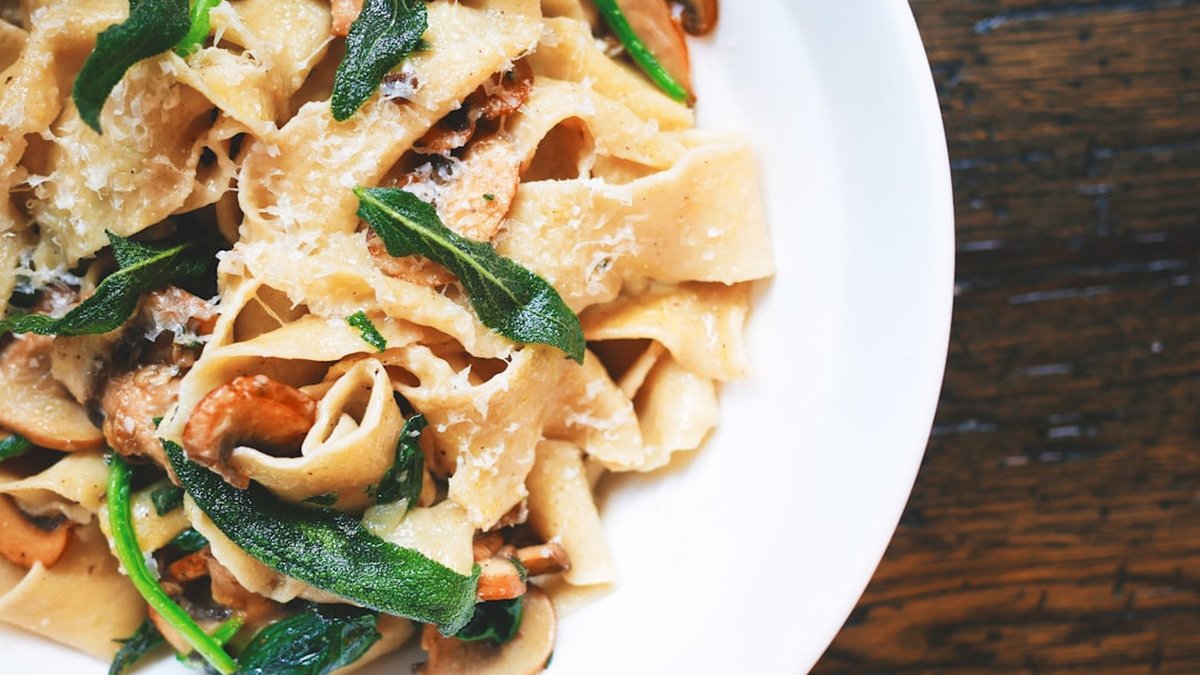
The move is emulsion: starchy pasta water beaten into fat until it turns from two things into one glossy thing that clings. Warm sliced garlic in a generous pool of olive oil over medium heat until it is pale gold, not brown, because garlic goes bitter the moment it colors past that. Cook 12 ounces of pasta, enough for four, in water salted hard enough to season both the noodles and the sauce that comes after. Do not rinse it: the starch on the surface is what makes the sauce stick.

Then the part people get wrong. Move the pasta into the pan with tongs, add a ladle of the cooking water, and keep it moving over heat until the oil stops pooling and the whole thing looks creamy. Save more water than you think you need, as the pantry pasta method puts it, because you can always boil it away and you cannot get it back. Cheese goes in off the heat, or it clumps.

This is also the cheapest dinner on the list. Cereals and bakery products, the category that holds pasta, were unchanged month over month in the August 2026 CPI. Olive oil is the ingredient that moved, so pour with intent, not abandon.
A can of fish and a can of tomatoes

Brown the garlic in oil, add a can of tomatoes, let it bubble down while the pasta cooks, then flake in a can of olive oil-packed tuna at the end so it stays in pieces rather than dissolving into paste. Red pepper flakes at the start, parsley at the end if you have it. Five things, all of which keep for a year.

The move here is finishing: drain the pasta a minute early, tip it into the sauce, and let it cook the rest of the way in the pan. Serious Eats reckons that takes an extra two or three minutes and gives you a slick, tomatoey glaze instead of sauce sitting on top of noodles. The same piece is blunt about the weak link: with so few components, the dish only shines when the canned tomatoes are good ones. That is the one place to spend, and it is still a can of tomatoes.

Greens dropped into the pasta pot

Anything leafy in the fridge drawer becomes dinner if you put it in the water with the pasta for the last minute or two. Chopped chard, kale, spinach, the outer leaves of a head of broccoli: they wilt, they drain with the pasta, and they leave you no second pan to wash. Warm a can of drained white beans or chickpeas in the garlic oil while that happens and you have body without meat.

Frozen works exactly as well and is the reason America's Test Kitchen tells weeknight cooks to keep peas, corn and edamame in the freezer alongside canned beans, on the grounds that a stocked pantry leaves you an hour or two from dinner at most. Add them straight to the pot in the last minute, no thawing. Finish with the emulsion from the first dish and a lot of black pepper. If you want the fuller version of that cabinet, we go through it shelf by shelf in the guide to stocking a pantry for weeknight dinners.

Egg and cheese, off the heat

Carbonara logic, stripped back: eggs, hard cheese, cured pork, pasta. One version doing the rounds runs to three pantry ingredients and fifteen minutes, which is about right. Beat the eggs and grated cheese together in a bowl, render the pork in a pan, then take the pan off the heat entirely before the pasta and a splash of its water go in and get tossed with the egg mixture. Residual heat thickens it. Direct heat scrambles it. That is the whole technique.

On the pork, you do not need guanciale, and this month there is a reason to check what you have. FSIS announced on 6 September 2026 a recall of about 1,513 pounds of imported ready-to-eat guanciale, lot 263311US with a best-by date of 16 May 2027, over possible Listeria contamination, distributed across eight states. No illnesses were confirmed at the time. Bacon or pancetta from the chiller cabinet does the job, and dairy prices have been kind to this one: the dairy index fell 0.3% over the twelve months to August 2026.

One pan, where the pasta cooks in the sauce

The last move skips the pot. Brown a protein in a wide pan, add small pasta and enough liquid to cover, and let it simmer until the pasta has drunk most of it. Orzo is the easy way in because it absorbs the sauce as it cooks and thickens the whole thing on its own, no reserved water needed. Shredded rotisserie chicken or frozen shrimp, which thaws in minutes, both go in near the end rather than the beginning.

Cooking in a single skillet is the one change that cuts the washing up rather than the cooking time, which is why recipe developers reach for it on weeknights. It asks something of the pan, though: wide enough that 12 ounces of pasta lies flat, deep enough to take the liquid, and with a lid. If you are browning beef for this, note that FSIS ordered a Class I recall in August 2026 covering roughly 29,628 pounds of raw beef imported without re-inspection, sold in Texas and Florida with use-or-freeze-by dates of 15 to 20 September 2026, so the freezer is worth a look.

Start with the first one, and not because it is the simplest. The emulsion it teaches, starchy water beaten into fat until it turns glossy, is the step that makes the other four taste like something rather than like noodles with stuff on them. Cook it four or five times and you will stop reaching for a recipe on the nights you have nothing planned, which is most of them.